How to Hotwire a Car in Project Zomboid
Sooner or later, every run in Knox County comes down to the same problem: you’ve found a car, but you don’t have the keys. Walking everywhere works for a while, but once your base is a few blocks from the nearest loot run, a working vehicle stops being a luxury and starts being the difference between a quick supply trip and a slow death by exhaustion (or worse, by horde). That’s where hotwiring comes in.
If you’re wondering how to hotwire in Project Zomboid, the short version is: level up two skills, sit in the driver’s seat, and open the right menu. The long version has a few traps that catch out almost everyone the first time, so let’s go through it properly.
What You Need to Hotwire in Project Zomboid
Before you even think about jumping in a car, your character needs to actually know how to do this. There are two ways to unlock hotwiring:
- Electrical Level 1 and Mechanics Level 2. This is the standard route for most builds. You can reach both levels reasonably fast by dismantling everyday objects: radios, CD players, and lamps push your Electrical skill, while sinks, bathtubs, and dumpsters raise Mechanics. Reading the corresponding skill books (Electrical for Beginners and Mechanics for Beginners) speeds things up considerably too.
- The Burglar occupation. Pick Burglar at character creation and you can hotwire from day one, no grinding required. It’s the fastest way into a car if you know you’ll want wheels early, though it does cost occupation points you might want elsewhere.
Those are the only two hotwire requirements in Project Zomboid. There’s no separate item or tool needed, and you don’t need to be carrying anything specific in your inventory. It genuinely comes down to skill levels or profession.
How to Hotwire a Car in Project Zomboid, Step by Step
Once you meet the requirements above, hotwiring a car in Project Zomboid is a short process:
- Get into the vehicle. Press E next to an unlocked door, or smash a window from the exterior vehicle menu if it’s locked. Breaking glass is loud and will damage the car slightly, so only do it if you can’t find the keys nearby.
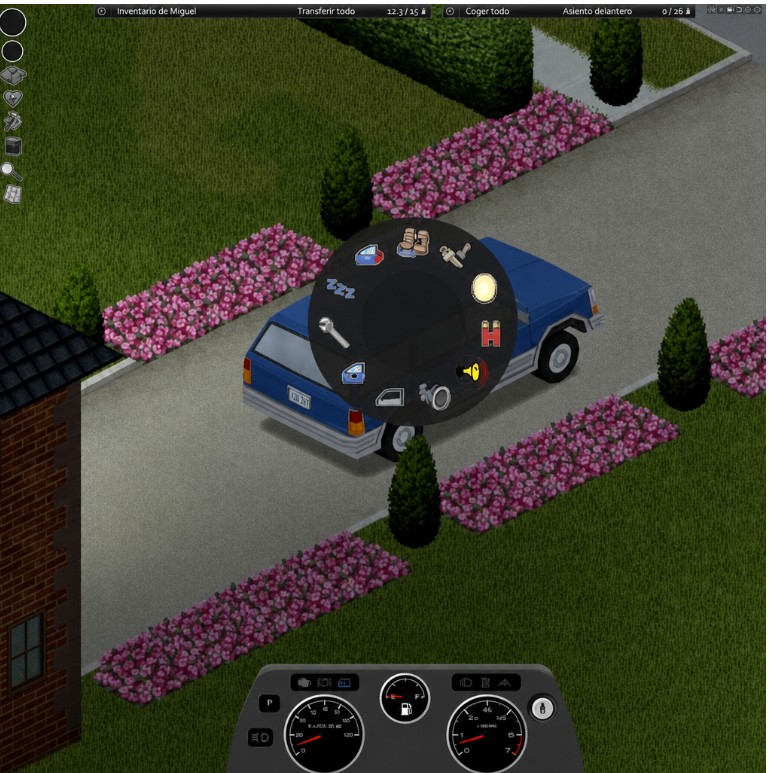
- Sit in the driver’s seat. This part trips up a lot of new players. If you end up in a passenger seat, open the vehicle radial menu (V) and use Switch Seat to move over. The hotwire option only appears for the driver.
- Open the vehicle radial menu. Press V while seated. If your skills or occupation qualify, you’ll see the “Hotwire Engine” option; if not, it’ll be greyed out with a message explaining what’s missing.
- Select Hotwire Engine and wait. The attempt isn’t guaranteed to work on the first try. Higher Electrical and Mechanics levels improve your odds and speed, but even a well-trained mechanic can fail a couple of times before the wiring cooperates.
- Start the engine. A successful hotwire only bypasses the need for a key. You still need to actually start the car afterward, using the dashboard controls or the corresponding keybind.
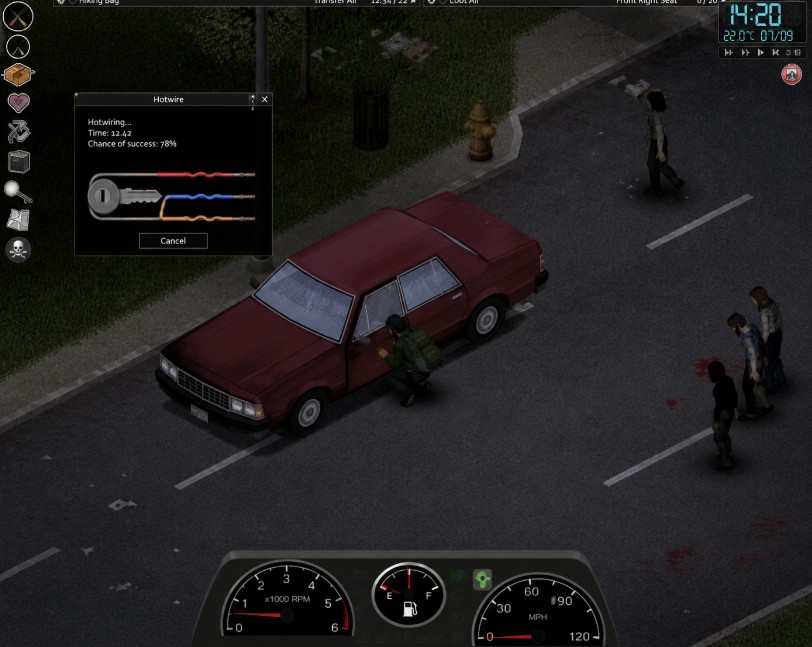
That’s the whole loop for how to hotwire cars in Project Zomboid: get in, sit as driver, open the wheel, pick the option, and give it a few attempts if needed.
Why Your Hotwired Car Still Won’t Move
This is where most players get caught out. You bypass the ignition successfully, hit start… and nothing happens. A few usual suspects:
- Empty fuel tank. Right-click the car and check Vehicle Mechanics, or pop the hood, to see how much gas is left. If it’s dry, you’ll need an empty gas can to siphon fuel from another vehicle or a gas pump before the car is going anywhere.
- Dead or missing battery. No battery, no ignition, no matter how good your hotwire skills are.
- Serious engine damage. A heavily wrecked car might start but stall constantly, or not start at all until you’ve done some repair work.
It’s worth popping the hood and checking the car’s condition before you commit to hotwiring it in the first place. There’s nothing worse than successfully hotwiring a Project Zomboid car in the middle of a horde only to realize it can’t actually drive anywhere.
Keys vs. Hotwiring: Which Is Better?
Hotwiring isn’t always your only option. Every vehicle has a key that can spawn in the glovebox, in a nearby house (check bedrooms, kitchens, and key hooks by the front door), or occasionally on a zombie corpse close to where the car is parked. Finding the key is quieter and instant, since there’s no risk of a failed attempt.
The trade-off is time. Searching a house for keys that might not even be there can eat up more of your day than just training up Electrical and Mechanics and hotwiring on the spot. In practice, most experienced survivors do both: grab keys when they’re sitting right there in the glovebox, and fall back on hotwiring for everything else.
Playing It Safe While You Hotwire
Starting an engine is loud, and loud noises in Project Zomboid mean zombies. A few habits that will save you a lot of grief:
- Clear the immediate area first. Check windows and doors of nearby buildings before you commit to hotwiring; a wandering horde can show up fast once the engine turns over.
- Fuel up before you need to run. Don’t wait until you’re being chased to discover the tank is empty.
- Have an escape route in mind. Know which direction you’re driving off in before you start the car, not after.
- Practice somewhere quiet. If your Electrical and Mechanics are still low, your first few attempts might fail more than once. Better to eat that risk in an empty parking lot than in the middle of a town center.
Getting the Most Out of Your Run
Hotwiring is one of those Project Zomboid mechanics that feels intimidating the first time and becomes second nature after a couple of successful runs. Once you’ve got a reliable car, exploring Knox County, stockpiling supplies, and outrunning hordes all get a lot easier.
If you’re playing with friends and want full control over how the world behaves, running your own Project Zomboid server lets you set the pace: multiplier tweaks, custom loot rates, and a persistent world that’s always there when your group logs back in.